
A solar battery is the heart of every solar power system. Whether you use your system at home or in a commercial space, your batteries ensure that you have uninterrupted power even when there is no sunlight. But like every piece of equipment, solar batteries do not last forever. They gradually lose capacity over time and eventually need replacement.
In Nigeria-where power outages are frequent, temperatures are high, and solar is becoming increasingly popular-knowing when your solar battery needs replacement is crucial. Replacing it too early wastes money; replacing it too late can damage your inverter, reduce power efficiency, and disrupt your backup supply.
This guide will show you the warning signs, battery lifespan expectations, and simple tests to know when it’s time for a new solar battery.
- How Long Do Solar Batteries Usually Last in Nigeria?
Solar battery lifespan depends on the type and usage:
Lithium (LiFePO₄) Batteries:
- 8-15 years
- High efficiency
- Handle heat better
- Ideal for Nigerian homes and businesses
- Require less maintenance
Tubular Lead-Acid Batteries:
- 3-7 years
- Cheaper but require frequent top-ups
- Sensitive to deep discharges
- Need proper ventilation
SMF/VRLA Batteries:
- 2-4 years
- Non-refillable
- Not ideal for heavy or daily usage in Nigeria
With Nigeria’s hot climate, poor ventilation and overloading can cause batteries to die earlier than expected. This makes it even more important to recognize early warning signs.
- Major Signs Your Solar Battery Needs Replacement
Below are the most common indicators that your solar battery is failing
- Drastically Reduced Backup Time
This is the most obvious sign.
If your battery previously powered your appliances for 8 hours, but now lasts only 1-3 hours, the battery capacity has significantly dropped.
Common causes include:
- Age and natural wear
- Overloading
- Deep discharge cycles
- Heat damage
- The Battery Charges Too Fast
It may seem like a good thing, but fast charging is often a warning sign.
A healthy battery charges slowly because it can store energy properly. A weak battery charges too quickly because it no longer holds capacity.
If your battery reaches “full” within an unusually short time, it’s likely dying.
- Visible Battery Swelling or Leakage
If you notice:
- A bulging/swollen battery
- Wetness around battery terminals
- Acidic smell
- Rust or corrosion
Then stop using the battery immediately.
These signs indicate internal damage, chemical leaks, or overheating—continuing to use such a battery can damage your inverter or cause a fire.
- Overheating Even With Light Use
Batteries naturally get warm when charging, but excessive heat is a serious warning.
If the battery becomes:
- Hot to the touch
- Very warm during discharge
- Hot even at low loads
…it has likely suffered thermal damage. Nigerian weather accelerates this issue, especially if batteries are installed in poorly ventilated spaces.
- Frequent Low-Voltage Alarms
If your inverter repeatedly shows:
- LOW BATTERY
- BATTERY LOW VOLTAGE
- BACKUP SHUTDOWN
Even after long charging hours, the battery is losing its ability to hold voltage.
This is one of the earliest signs of battery failure.
- Battery Not Charging Fully
Aged or damaged batteries often get stuck at:
- 11.5V – 12.2V (for 12V batteries)
- 23V – 24V (for 24V batteries)
- 46V – 48V (for 48V lithium batteries)
If your battery never reaches full charge, especially during bright sunlight, the internal cells are failing and replacement is near.
- Reduced Efficiency During High Temperatures
Nigeria’s heat significantly affects battery performance. If your battery backup gets worse during hot afternoons, but improves at night, it means the battery chemistry is degrading.
Lithium batteries manage heat much better; tubular batteries deteriorate faster.
- Age of the Battery
Even if your battery seems “okay,” age catches up.
Once a:
- Lithium battery reaches 7–10 years
- Tubular battery reaches 3–5 years
- SMF battery reaches 2–3 years
…it naturally begins to decline. If you’re experiencing other symptoms plus old age, it’s time to replace it.
- How to Test a Battery’s Health at Home
Here are simple DIY methods to check battery condition:
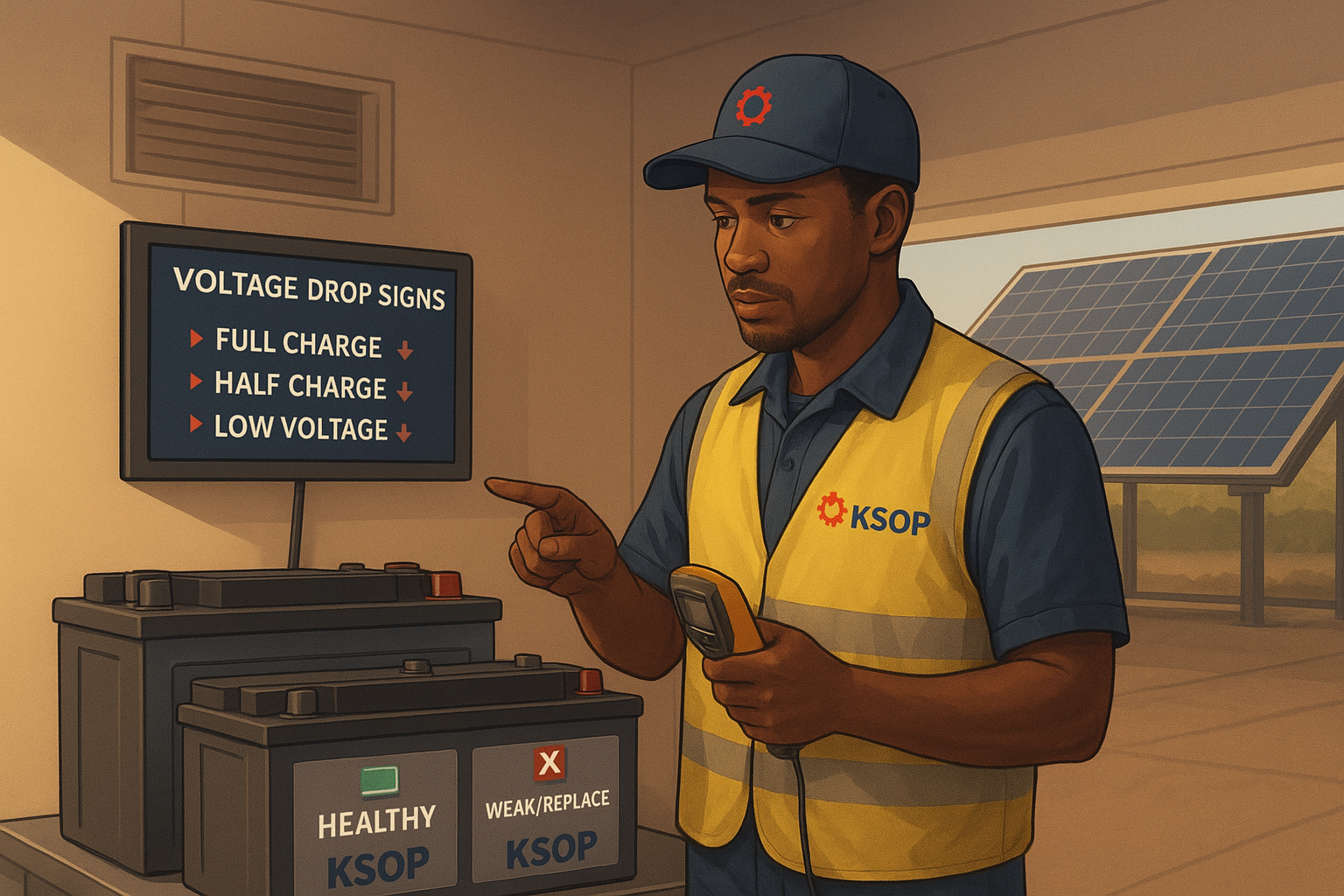
✔ Method 1: Voltage Test (Using Inverter Display or Multimeter)
A healthy 12V battery should read:
- 12.6V – 13.6V (fully charged)
- 12.2V – 12.4V (50% charged)
- 11.8V and below = Weak/Bad
If your battery drops below 12V immediately after removing load, it is weak.
✔ Method 2: Backup Duration Test
Fully charge your battery.
Run only:
- Fan
- 2-3 bulbs
- TV
If the backup time is less than 30–40% of what you used to get, the battery is nearing end-of-life.
✔ Method 3: Physical Inspection
If you observe:
- Swelling
- Corrosion
- Burning smell
- Leaking acid
Replace immediately.
✔ Method 4: Heat Test
Touch the battery casing after 1 hour of use.
If it’s hot-not just warm-the battery plates may be damaged.
- What Happens If You Delay Replacing a Weak Battery?
A failing battery can damage your entire system.
Consequences include:
- Inverter overload and shutdown
- Burnt inverter capacitors
- Erratic power output
- Shortened lifespan of other batteries in the bank
- Unexpected power outages
Replacing the battery at the right time ensures your solar system remains efficient and protects your investment.
- How to Make Your Battery Last Longer
To maximize lifespan in Nigeria:
✔ Keep batteries in a cool, ventilated environment
Heat damage is one of the biggest killers.
✔ Avoid deep discharge
Never let your battery drop below 50% for tubular or lead-acid types.
✔ Use the right inverter settings
Wrong charging current can fry your battery.
✔ Avoid fake batteries
Buy from reputable brands or verified installers like KSOP Global Limited.
✔ Do not overload your solar system
Match your battery to your inverter and solar panel capacity.
- When Should You Replace Your Solar Battery?
Replace your battery if:
- Backup has reduced by 50-70%
- Battery gets hot frequently
- Inverter alarms happen daily
- Battery is swelling
- Battery cannot reach full charge
- It’s older than the recommended lifespan
If you’re experiencing 2 or more of these symptoms, replacement is due.
Your solar battery is a critical investment in your home or business. Recognizing early signs of failure can save you money and protect your entire power system. By monitoring backup time, charging behavior, temperature, and physical condition, you’ll always know when it’s time for a replacement.
For genuine, long-lasting batteries and professional installation in Nigeria, KSOP Global Limited remains one of the most trusted and experienced service providers.