
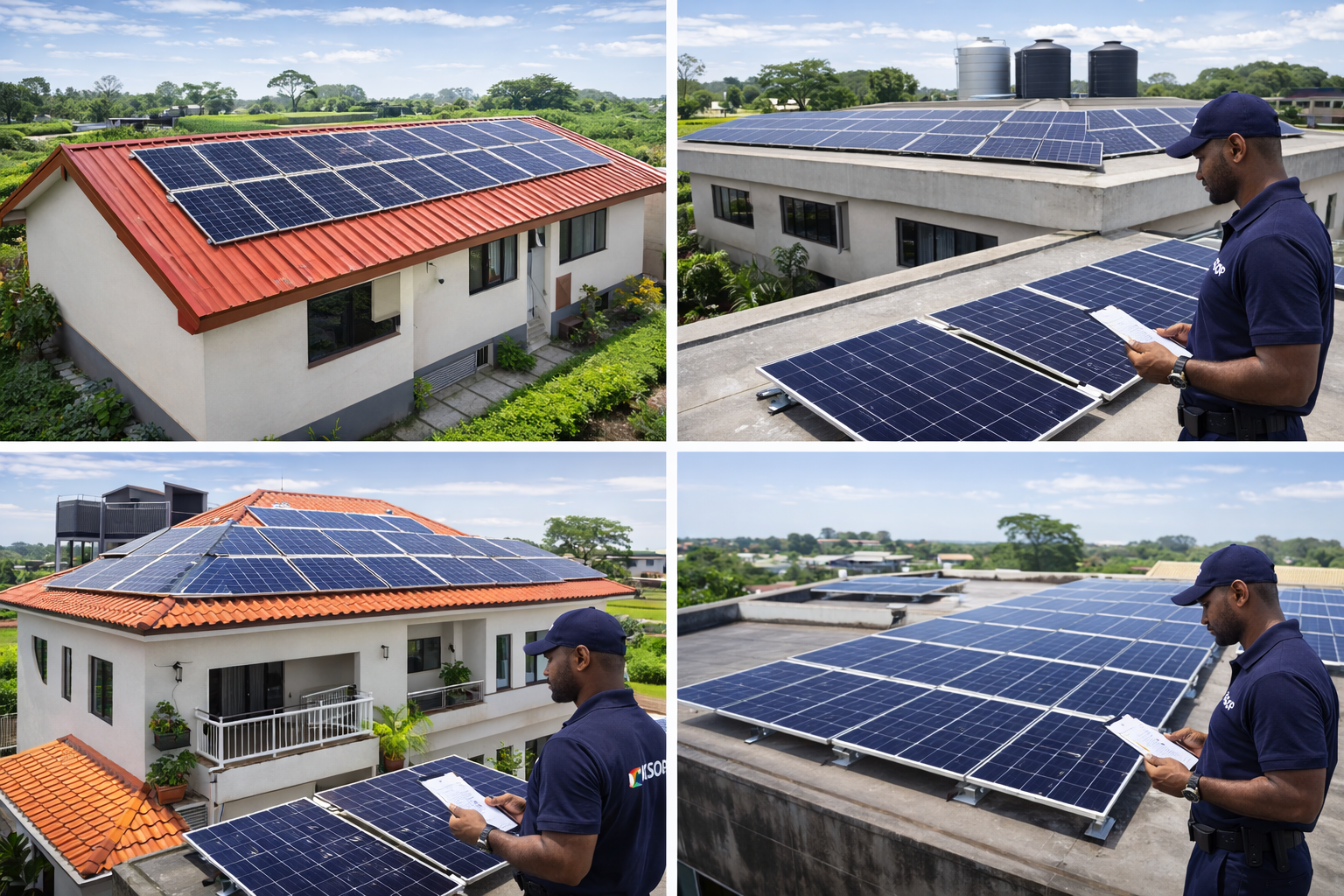
As solar energy adoption continues to rise across Nigeria, more homeowners, businesses, and institutions are turning to rooftop solar installations as a smart and sustainable power solution. With frequent power outages, high fuel costs, and rising electricity tariffs, solar panels installed on roofs offer a reliable alternative that maximizes unused space while delivering clean energy.
However, not all roofs are the same, and neither are solar panel installation methods. Choosing the right type of solar panel roof installation is crucial for efficiency, durability, safety, and long-term return on investment. In this guide, we’ll explore the different types of solar panel roof installations and clearly explain their advantages, helping you make an informed decision.
Why Roof-Mounted Solar Panels Are Popular in Nigeria
Roof-mounted solar systems are among the most common solar installations in Nigeria because they:
- Utilize unused roof space efficiently
- Protect panels from ground-level damage
- Reduce land-use conflicts, especially in urban areas
- Offer better exposure to sunlight when properly installed
With Nigeria’s abundant sunlight, rooftop solar installations can significantly reduce dependence on the national grid and generators.
Key Factors That Determine the Type of Roof Installation
Before choosing a solar roof installation type, installers typically consider:
- Roof material (metal, concrete, tile, shingles)
- Roof angle and orientation
- Structural strength of the building
- Local weather conditions
- Budget and aesthetics
- Ease of maintenance
These factors influence which installation method will deliver the best performance and durability.
- Solar Panel Installation on Metal Roofs
Overview
Metal roofs are very common in Nigeria, especially aluminum and long-span roofing sheets. They are among the easiest and most efficient surfaces for solar panel installation.
Installation Method
Special clamps or brackets are attached directly to the metal seams or roofing sheets without drilling excessive holes.
Advantages of Metal Roof Solar Installation
- High durability: Metal roofs last long and can support solar panels for decades.
- Easy installation: Less drilling reduces installation time and roof damage.
- Excellent water resistance: Proper mounting prevents leakages.
- Cost-effective: Lower labor and mounting costs compared to other roof types.
- Good ventilation: Reduces heat buildup under panels, improving efficiency.
Metal roofs are ideal for residential homes, warehouses, factories, and commercial buildings.
- Solar Panel Installation on Concrete Roofs
Overview
Concrete roofs are common in duplexes, commercial buildings, offices, and apartments across Nigeria.
Installation Method
Panels are mounted using anchored frames, ballasted systems, or concrete bolts depending on roof design.
Advantages of Concrete Roof Solar Installation
- Strong load-bearing capacity: Easily supports heavy solar panels and mounting structures.
- Flexible panel positioning: Installers can adjust tilt and orientation for maximum sunlight.
- High wind resistance: Strong anchoring ensures stability during storms.
- Long lifespan: Concrete roofs match the lifespan of solar systems.
Concrete roofs are excellent for large solar installations where optimization of panel angle is critical.
- Solar Panel Installation on Tile Roofs
Overview
Tile roofs (ceramic or clay tiles) are less common but still used in high-end residential properties.
Installation Method
Tiles are carefully removed, mounting hooks are installed, and tiles are replaced to maintain aesthetics and waterproofing.
Advantages of Tile Roof Solar Installation
- Elegant appearance: Maintains the visual appeal of premium homes.
- Secure mounting: Specialized hooks ensure strong panel attachment.
- Weather resistance: Proper installation prevents leaks and tile damage.
Although more complex, tile roof installations provide both functionality and beauty when done by professionals.
- Solar Panel Installation on Shingle Roofs
Overview
Shingle roofs are more common in modern estates and luxury housing developments.
Installation Method
Panels are mounted using flashing and bolts secured into roof rafters.
Advantages of Shingle Roof Solar Installation
- Neat integration: Panels blend well with the roof design.
- Lightweight compatibility: Shingle roofs pair well with modern lightweight panels.
- Cost-efficient for small systems: Suitable for residential solar installations.
Proper sealing is essential to avoid leaks, making professional installation critical.
- Flat Roof Solar Panel Installation
Overview
Flat roofs are common on commercial buildings, schools, hospitals, and apartment blocks.
Installation Method
Panels are installed using tilt frames or ballasted mounting systems that don’t penetrate the roof surface.
Advantages of Flat Roof Solar Installation
- Adjustable tilt angle: Maximizes solar energy production.
- No roof penetration: Reduces risk of leaks.
- Easy maintenance access: Panels are easier to clean and inspect.
- Scalable design: Ideal for expanding solar capacity in the future.
Flat roof systems are highly popular for commercial and industrial solar projects.
- Integrated Solar Roof Systems (Building-Integrated PV)
Overview
This advanced system replaces traditional roofing materials with solar-integrated panels.
Installation Method
Solar panels act as both roofing material and energy generator.
Advantages of Integrated Solar Roof Systems
- Modern aesthetics: Sleek, futuristic appearance.
- Dual functionality: Serves as both roof and power source.
- Space efficiency: No additional mounting structures needed.
While more expensive, integrated systems are gaining popularity in luxury and eco-friendly buildings.
Comparing Roof Installation Types at a Glance
| Roof Type | Installation Ease | Cost | Durability | Efficiency |
| Metal Roof | Very Easy | Low | High | High |
| Concrete Roof | Moderate | Medium | Very High | Very High |
| Tile Roof | Complex | High | High | High |
| Shingle Roof | Moderate | Medium | Medium | High |
| Flat Roof | Easy | Medium | High | Very High |
| Integrated Solar Roof | Complex | Very High | High | High |
Why Professional Installation Matters
Regardless of roof type, professional solar installation ensures:
- Correct load calculations
- Proper waterproofing
- Optimal panel orientation
- Compliance with safety standards
- Maximum energy efficiency
A poorly installed system can lead to leaks, reduced output, or structural damage.
How Roof Type Affects Solar Efficiency
The right roof installation:
- Improves sunlight exposure
- Enhances airflow to reduce panel overheating
- Prevents shading issues
- Extends system lifespan
When combined with quality inverters and batteries, roof-mounted solar systems can provide uninterrupted power for years.
Final Thoughts
Choosing the right type of solar panel roof installation is just as important as choosing the panels themselves. From metal and concrete roofs to flat and integrated systems, each installation type has unique advantages suited to different buildings and budgets.
In Nigeria’s sunny climate, a properly installed rooftop solar system can drastically reduce energy costs, improve power reliability, and contribute to a cleaner environment. By understanding your roof type and working with experienced solar professionals, you can maximize efficiency, safety, and long-term value.