
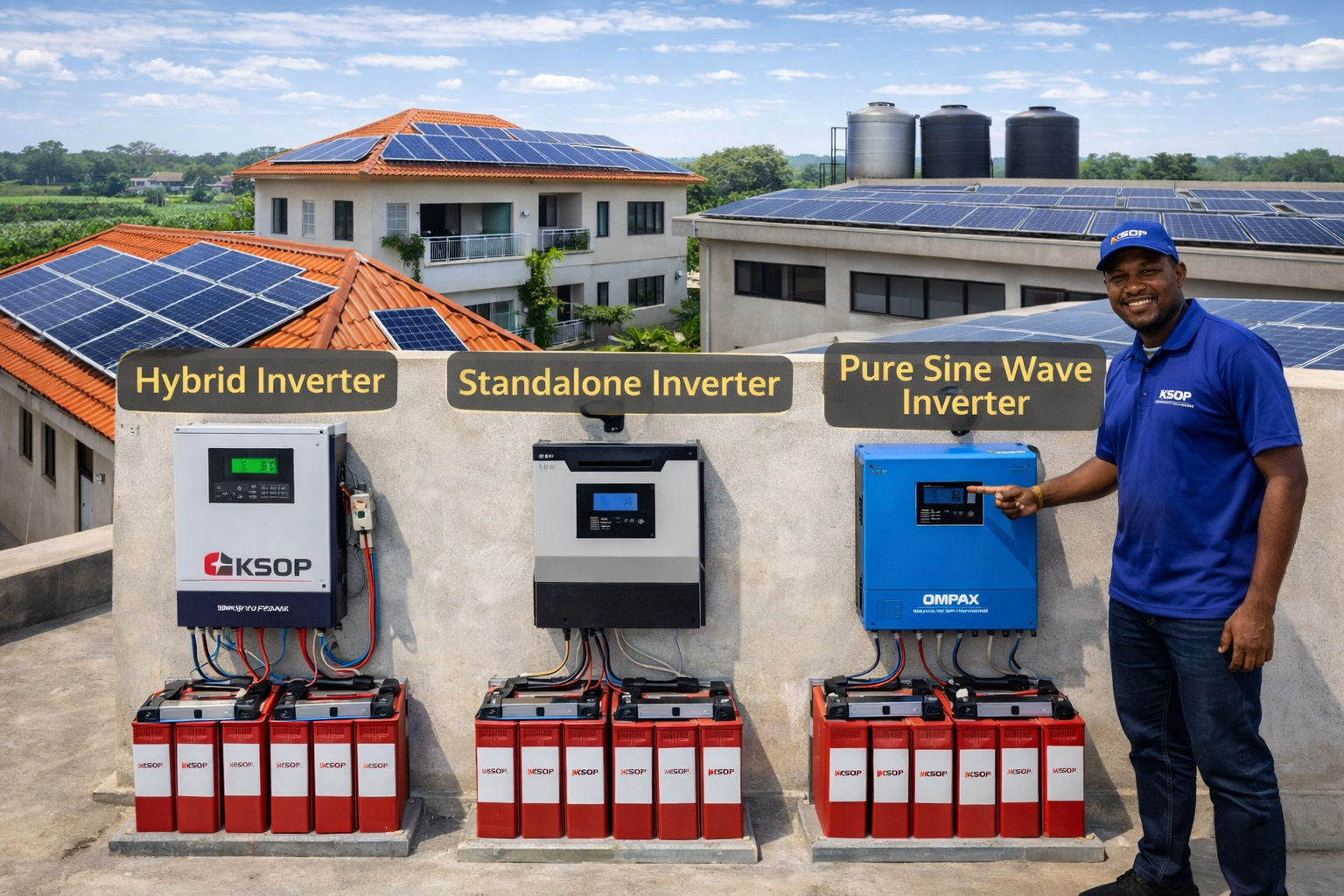
With Nigeria’s persistent power challenges, inverters have become an essential solution for homes, offices, schools, hospitals, and businesses. Whether you are running a small apartment, a commercial facility, or an industrial operation, choosing the right inverter can determine how reliable, efficient, and cost-effective your power system will be.
However, not all inverters are the same. There are different types of inverters, each designed for specific energy needs, environments, and budgets. Understanding these inverter types-and their benefits-will help you make the right decision and avoid costly mistakes.
In this guide, we’ll break down the main types of inverters, how they work, their advantages, and which is best suited for Nigerian conditions.
What Is an Inverter?
An inverter is a device that converts DC (Direct Current) power stored in batteries or generated by solar panels into AC (Alternating Current) power, which is what most household and commercial appliances use.
Inverters are commonly used with:
- Solar panels
- Battery banks
- Grid electricity (PHCN/NEPA)
- Backup power systems
In Nigeria, inverters are widely used to provide uninterrupted electricity during power outages and to reduce reliance on generators.
Why Choosing the Right Type of Inverter Matters
Selecting the wrong inverter can lead to:
- Frequent system shutdowns
- Overloading and damage
- Battery failure
- High maintenance costs
The right inverter, on the other hand, ensures:
- Stable power supply
- Long battery lifespan
- Lower electricity and fuel costs
- Quiet and clean energy
Main Types of Inverters and Their Benefits
1. Standalone (Off-Grid) Inverters
Standalone inverters operate independently of the national grid. They rely entirely on batteries, which may be charged by solar panels or generators.
Benefits of Standalone Inverters
- Ideal for areas without grid power
- Reliable backup during long outages
- Works well in rural and off-grid locations
- Can be paired with solar panels
Best For:
- Rural homes
- Farms
- Remote facilities
- Areas with no electricity supply
2. Grid-Tie Inverters
Grid-tie inverters are designed to work directly with grid electricity and solar panels, without batteries.
Benefits of Grid-Tie Inverters
- Reduces electricity bills
- Efficient use of solar energy
- No battery cost or maintenance
- Excess power can be fed back to the grid (where applicable)
Limitations in Nigeria
- Shuts down during grid failure
- Depends on stable grid infrastructure
Best For:
- Commercial buildings
- Urban homes with stable grid power
3. Hybrid Inverters
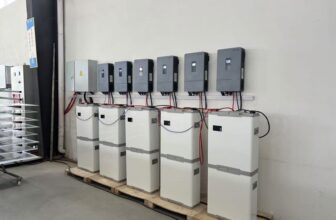
Hybrid inverters combine the functions of grid-tie and off-grid inverters. They can work with solar panels, batteries, and grid power simultaneously.
Benefits of Hybrid Inverters
- Automatic switching between power sources
- Stores excess solar energy in batteries
- Provides backup during grid outages
- Highly efficient and flexible
Why Hybrid Inverters Are Popular in Nigeria
- Handles unstable grid power
- Reduces generator usage
- Supports solar + battery systems
Best For:
- Homes
- Offices
- Schools
- Hospitals
- Businesses
4. Pure Sine Wave Inverters
Pure sine wave inverters produce electricity that is identical to grid power.
Benefits of Pure Sine Wave Inverters
- Safe for all appliances
- Smooth operation of electronics
- Prevents overheating and noise
- Extends appliance lifespan
Best For:
- Air conditioners
- Refrigerators
- Medical equipment
- Sensitive electronics
5. Modified Sine Wave Inverters
Modified sine wave inverters produce a simpler waveform and are generally cheaper.
Benefits of Modified Sine Wave Inverters
- Affordable
- Suitable for basic appliances
- Simple power needs
Limitations
- Can damage sensitive electronics
- Causes noise and overheating
- Lower efficiency
Best For:
- Lights
- Fans
- Simple loads
6. Low-Frequency Inverters
Low-frequency inverters are heavy-duty inverters designed to handle high surge power.
Benefits of Low-Frequency Inverters
- Handles heavy loads
- Strong motor startup capacity
- Durable and reliable
Best For:
- Water pumps
- Freezers
- Industrial machines
7. High-Frequency Inverters
High-frequency inverters are lightweight and compact.
Benefits of High-Frequency Inverters
- Energy-efficient
- Compact design
- Faster switching
- Lower noise
Best For:
- Residential solar systems
- Office power backup
Comparing Inverter Types at a Glance
| Inverter Type | Efficiency | Cost | Best Use |
| Standalone | High | Medium | Off-grid |
| Grid-Tie | Very High | Medium | Grid + Solar |
| Hybrid | Very High | Higher | All-in-one |
| Pure Sine | High | Medium | Sensitive devices |
| Modified Sine | Low | Low | Basic loads |
| Low-Frequency | High | High | Heavy loads |
| High-Frequency | High | Medium | Homes & offices |
How to Choose the Right Inverter in Nigeria
When selecting an inverter, consider:
- Total energy load
- Type of appliances
- Battery capacity
- Future expansion
- Solar integration
- Budget
Professional assessment is always recommended to avoid under- or over-sizing your inverter system
Why KSOP Global Limited Is Your Trusted Inverter Partner
At KSOP Global Limited, we:
- Supply high-quality inverters
- Design custom solar + inverter systems
- Install and maintain systems professionally
- Offer expert guidance for Nigerian conditions
Our solutions are tailored to deliver reliable, efficient, and long-lasting power.
Conclusion
Understanding the types of inverters and their benefits is key to building a reliable power system in Nigeria. From standalone and hybrid inverters to pure sine wave and low-frequency models, each inverter serves a specific purpose.
Choosing the right inverter ensures:
- Stable electricity
- Reduced fuel costs
- Long equipment lifespan
- Peace of mind
For professional advice, quality products, and expert installation, KSOP Global Limited remains a trusted name in power solutions.