
Inverter systems have become a lifeline for Nigerian homes and businesses battling unreliable grid power. However, one of the most common problems inverter users face is overloading. When an inverter is overloaded, it can shut down unexpectedly, beep continuously, damage internal components, or fail completely. Worse still, repeated overloading can drastically shorten the lifespan of your inverter and batteries.
In this comprehensive guide, you’ll learn what inverter overloading means, why it happens, warning signs to watch out for, and practical steps you can take to prevent it. Whether you are using a 1kVA inverter at home or a large hybrid system for your business, this article will help you protect your investment and enjoy uninterrupted power.
What Does Inverter Overloading Mean?
Inverter overloading occurs when the total electrical load connected to the inverter exceeds its rated capacity. Every inverter has a maximum power output, usually measured in VA (Volt-Amps) or kVA. When you connect appliances that collectively demand more power than the inverter can supply, the system becomes overloaded.
For example:
- A 3kVA inverter can safely handle about 2,400 watts
- Running a fridge, freezer, microwave, pressing iron, and air conditioner at the same time may exceed that limit
When this happens, the inverter struggles to supply power, leading to alarms, shutdowns, or damage.
Why Inverter Overloading Is a Serious Problem
Overloading isn’t just an inconvenience-it can be costly. Here’s why:
- 🔥 Overheating of inverter components
- 🔋 Rapid battery drain and battery damage
- ⚠️ Frequent system shutdowns
- 💸 Costly repairs or complete inverter failure
- ⏳ Reduced lifespan of your entire solar or inverter system
Preventing overload is one of the easiest ways to extend the life of your inverter and batteries.
Common Causes of Inverter Overloading in Nigeria
- Using the Wrong Inverter Size
Many users buy inverters without properly calculating their energy needs. Installing a small inverter for a large home or office is a guaranteed path to overload.
- Running High-Power Appliances Simultaneously
Appliances like:
- Air conditioners
- Electric kettles
- Pressing irons
- Microwaves
- Water heaters
consume large amounts of power, especially at startup.
- Ignoring Appliance Surge Power
Some appliances draw 2-3 times their normal power when they start. This surge can instantly overload an inverter.
- Poor System Design or Installation
Incorrect wiring, undersized cables, or wrong inverter settings can cause load imbalance and overload.
- Battery or Inverter Aging
Old batteries and stressed inverters struggle to deliver full output, making overload more likely even at normal loads.
Warning Signs Your Inverter Is Overloading
Watch out for these early signs:
- Continuous beeping or alarm sounds
- Inverter shutting down suddenly
- Display showing “OVERLOAD” or “FAULT”
- Lights dimming when appliances start
- Excessive inverter heat
Ignoring these signs can lead to permanent damage.
How to Prevent Your Inverter From Overloading
- Calculate Your Total Load Properly
Before installation-or when upgrading-list all appliances you plan to power and note their wattage. Add them up and ensure your inverter capacity comfortably exceeds the total.
💡 Expert tip: Always add a 20-30% safety margin.
- Use the Right Inverter Capacity
Choose an inverter that matches your lifestyle:
- Small apartments: 1kVA-2kVA
- Average homes: 3kVA-5kVA
- Large homes or offices: 7.5kVA-20kVA+
At KSOP Global Limited, we perform professional load assessments to prevent under-sizing.
- Avoid Running Heavy Appliances Together
Stagger usage of high-power appliances. For example:
- Don’t iron while running the microwave
- Turn off AC before starting a pumping machine
This simple habit significantly reduces overload risk.
- Separate Essential and Non-Essential Loads
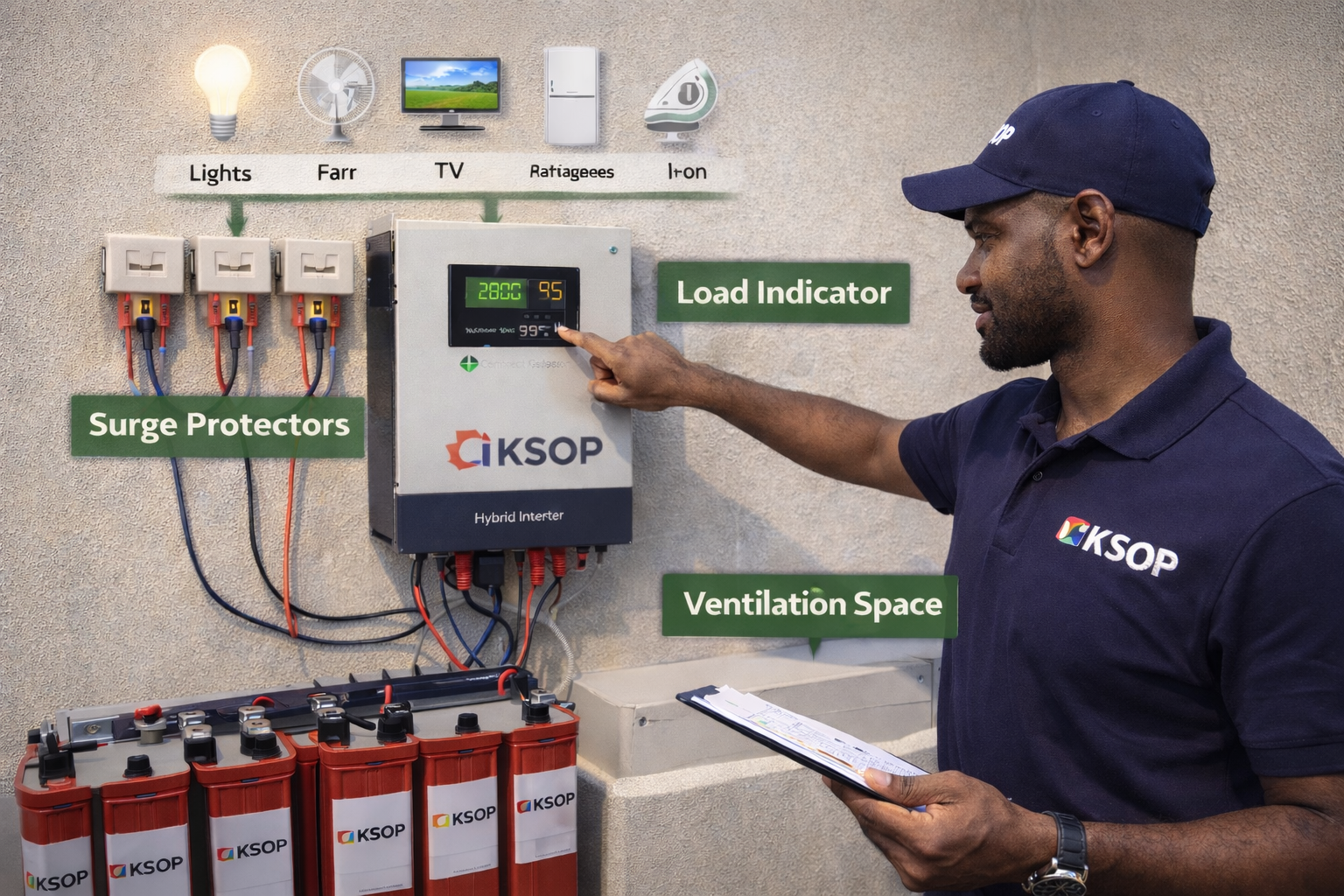
Create a dedicated essential load circuit for:
- Lights
- Fans
- TV
- Routers
- Refrigerators
High-load appliances can be connected only when needed or excluded entirely.
- Use Energy-Efficient Appliances
Modern inverter fridges, LED TVs, and energy-saving air conditioners consume far less power and reduce stress on your inverter.
- Ensure Proper Ventilation
Overheated inverters lose efficiency and overload easily. Install your inverter in a:
- Cool
- Well-ventilated
- Dust-free environment
Avoid enclosed spaces without airflow.
- Upgrade Batteries When Needed
Weak batteries force the inverter to work harder. Using high-quality lithium or well-maintained tubular batteries helps stabilize power output and prevent overload.
- Set Correct Inverter Parameters
Incorrect settings-such as low cut-off voltages or wrong output priorities-can cause unnecessary overload. Always configure settings according to manufacturer guidelines.
- Install Surge Protection Devices
Sudden voltage spikes can momentarily overload the inverter. Proper surge protection and earthing help stabilize system performance
- Schedule Regular Maintenance
Routine inspections help identify:
- Loose connections
- Aging components
- Load imbalance
Preventive maintenance is cheaper than emergency repairs.
When to Upgrade Your Inverter
You should consider upgrading if:
- Your power needs have increased
- You experience frequent overload alarms
- You recently added new appliances
- Your inverter struggles even at moderate loads
A professional assessment can save you from repeated failures.
Why Professional Installation Matters
A properly designed inverter system balances:
- Load demand
- Battery capacity
- Inverter size
- Future expansion needs
At KSOP Global Limited, our certified technicians design systems that eliminate overload risks, ensure safety, and deliver long-term reliability.
Final Thoughts
Inverter overloading is one of the most avoidable causes of system failure in Nigeria. With proper planning, correct inverter sizing, smart usage habits, and professional installation, you can enjoy stable, stress-free power for years.
If your inverter is frequently beeping, shutting down, or overheating, don’t ignore it-overload today can mean total failure tomorrow.