
Security concerns continue to rise across Nigeria, affecting homeowners, business owners, and institutions alike. Traditional CCTV systems depend heavily on grid electricity, which is often unreliable and costly due to frequent power outages and fuel expenses. This is where solar-powered CCTV systems come in as a smart, efficient, and sustainable alternative.
Solar-powered CCTV offers uninterrupted surveillance, reduced running costs, and reliable security-making it an ideal solution for both residential and commercial properties. This comprehensive guide explains how solar CCTV works, its benefits, system components, applications, and why it is becoming the preferred choice for modern security.
What Is Solar-Powered CCTV?
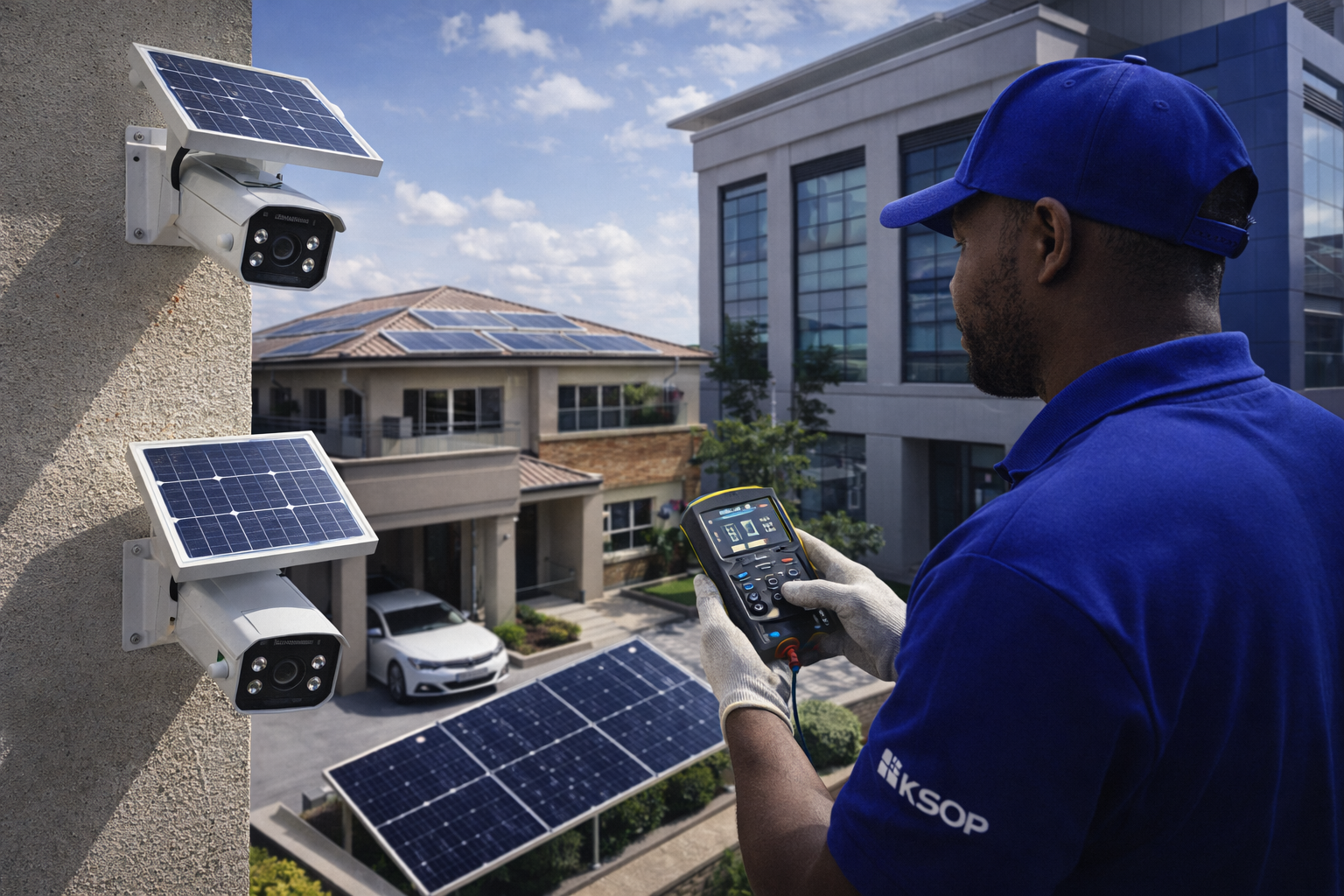
Solar-powered CCTV is a surveillance system that operates primarily using solar energy. Instead of relying solely on public electricity, these systems use solar panels to charge batteries, which then power the CCTV cameras and recording devices.
This setup ensures continuous operation even during power outages, nighttime, or in off-grid locations. Solar CCTV systems are commonly used in homes, offices, warehouses, schools, farms, construction sites, and remote areas.
How Solar CCTV Systems Work
A typical solar-powered CCTV system consists of:
- Solar Panels – Capture sunlight and convert it into electricity.
- Charge Controller – Regulates power flow to prevent battery overcharging.
- Battery Bank – Stores energy for nighttime and cloudy periods.
- CCTV Cameras – Monitor and record video footage.
- Recording Unit (NVR/DVR) – Stores video data.
- Monitoring Interface – Mobile app or computer for live viewing and playback.
During the day, solar panels generate electricity to power the cameras and charge the batteries. At night or during low sunlight, the batteries automatically supply power, ensuring 24/7 surveillance.
Why Solar-Powered CCTV Is Ideal for Nigeria
- Unreliable Power Supply
Frequent outages make grid-dependent CCTV systems ineffective. Solar CCTV eliminates downtime caused by power failure.
- High Fuel and Electricity Costs
Generators and electricity bills increase security costs. Solar systems significantly reduce monthly expenses.
- Abundant Sunlight
Nigeria receives ample sunlight throughout the year, making solar energy highly efficient and reliable.
- Security in Remote Locations
Solar CCTV works perfectly in areas without access to public power, such as farms, estates, and construction sites.
Key Benefits of Solar-Powered CCTV Systems
Uninterrupted Surveillance
Solar-powered systems operate continuously, protecting your property day and night.
Cost Savings
After installation, operating costs are minimal since sunlight is free.
Eco-Friendly Solution
Solar energy reduces carbon emissions and reliance on fossil fuels.
Easy Installation
No complex wiring or dependence on grid power.
Scalability
Systems can be expanded easily by adding more cameras or panels.
Remote Monitoring
View live footage from anywhere via smartphone or computer.
Solar CCTV for Homes
Improved Home Security
Solar CCTV protects against burglary, vandalism, and unauthorized access.
Monitoring Entry Points
Cameras can be installed at gates, doors, driveways, and backyards.
Peace of Mind
Homeowners can monitor their property remotely while at work or traveling.
Child and Elder Care
Cameras help supervise children and elderly family members.
Solar CCTV for Businesses
Theft Prevention
Retail stores, warehouses, and offices benefit from 24/7 monitoring.
Employee Accountability
CCTV helps reduce internal theft and misconduct.
Operational Monitoring
Business owners can track activities in real time from any location.
Customer Safety
Visible cameras deter criminal activity and enhance trust.
Types of Solar CCTV Cameras
Bullet Cameras
Ideal for outdoor surveillance with long viewing distance.
Dome Cameras
Discreet and tamper-resistant, suitable for indoor and outdoor use.
PTZ Cameras
Pan, tilt, and zoom for wide-area monitoring.
Wireless Solar Cameras
Operate independently with built-in panels and batteries.
Features to Look for in Solar CCTV Systems
- High-definition (HD or 4K) video quality
- Night vision and infrared sensors
- Motion detection and alerts
- Weatherproof design
- Large battery capacity
- Cloud or local storage options
- Mobile app compatibility
Maintenance Tips for Solar CCTV Systems
- Clean solar panels regularly to maintain efficiency
- Check battery health periodically
- Update camera firmware
- Inspect wiring and mounts
- Ensure clear camera angles
Proper maintenance ensures long-lasting performance and reliability.
Why Professional Installation Matters
Although solar CCTV systems are easy to deploy, professional installation ensures:
- Correct camera positioning
- Proper solar panel alignment
- Accurate battery sizing
- Secure wiring and mounting
- Optimal system performance
Professional installers also provide technical support and long-term maintenance.
Integrating Solar CCTV with Other Security Systems
Solar CCTV can be combined with:
- Smart access control systems
- Motion sensors and alarms
- Perimeter fencing systems
- Solar-powered floodlights
This creates a complete, layered security solution for homes and businesses.
The Future of Solar-Powered Surveillance
Advancements in solar technology and smart security are driving the future of surveillance. AI-powered analytics, facial recognition, and cloud-based monitoring are making solar CCTV systems smarter and more efficient.
As energy costs rise and security needs increase, solar-powered surveillance will continue to grow as the most reliable and sustainable solution.
Conclusion
Solar-powered CCTV systems provide a powerful, cost-effective, and reliable security solution for homes and businesses. By harnessing solar energy, these systems overcome power challenges, reduce costs, and deliver uninterrupted surveillance.
Whether you are securing a residential property, commercial space, or remote facility, solar CCTV offers peace of mind and long-term value. Investing in a professionally installed system ensures maximum performance, durability, and security.