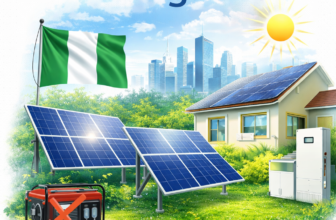

Solar energy has emerged as one of the most promising solutions to Nigeria’s persistent electricity problems. With abundant sunlight throughout the year, Nigeria has enormous potential to generate electricity through solar power. Many homes, businesses, and industries are now adopting solar energy systems to reduce dependence on the unreliable national grid and expensive fuel generators.
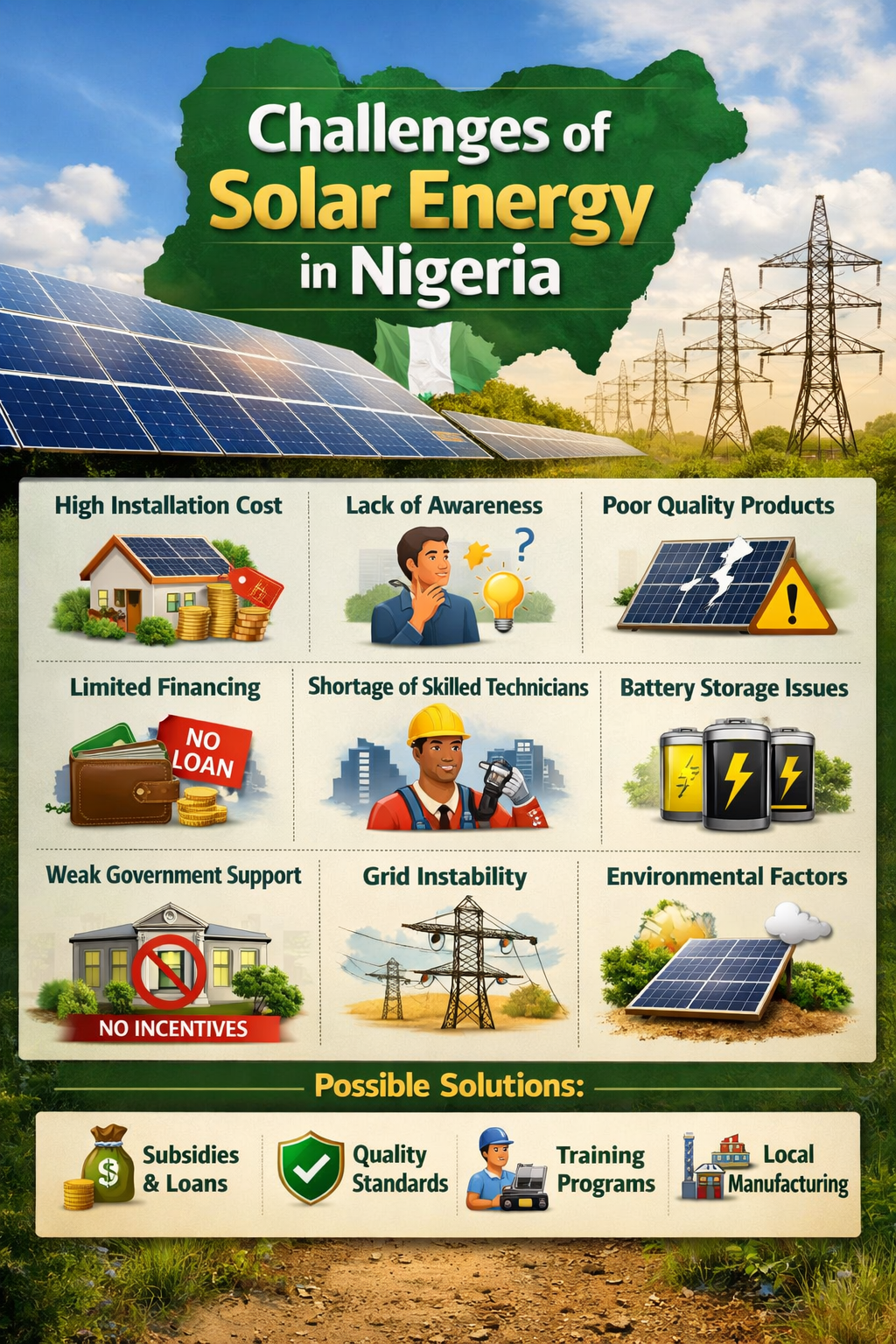
Despite its benefits, solar energy adoption in Nigeria still faces several challenges that slow down its widespread implementation. Understanding these challenges is important for policymakers, investors, and consumers who want to maximize the benefits of renewable energy.
In this article, we explore the major challenges of solar energy in Nigeria, their causes, and possible solutions that can help improve the growth of the solar industry.
- High Initial Installation Cost
One of the biggest challenges of solar energy adoption in Nigeria is the high upfront cost of installation.
Solar systems require several components such as:
- Solar panels
- Solar inverters
- Lithium or lead-acid batteries
- Mounting structures
- Electrical cables
- Protection devices
These components can make the initial investment expensive for many households and small businesses.
Although solar systems save money in the long run by reducing electricity bills and fuel costs, the initial capital required discourages many potential users.
Possible Solution
- Government incentives and subsidies
- Solar financing programs
- Pay-as-you-go solar systems
- Partnerships with financial institutions
These solutions can make solar energy more affordable for Nigerians.
- Lack of Public Awareness
Many people in Nigeria still lack proper understanding of how solar energy systems work and their long-term benefits.
Some common misconceptions include:
- Solar systems cannot power large appliances
- Solar energy is unreliable during cloudy weather
- Solar installations require constant maintenance
These misunderstandings discourage people from adopting solar power.
Possible Solution
Public awareness campaigns, educational programs, and demonstrations by solar companies can help people better understand solar technology and its benefits.
- Poor Quality Solar Products in the Market
Nigeria’s solar market has been flooded with low-quality and counterfeit solar products. These products often fail after a short period of use, leading to poor customer experiences.
Common problems caused by substandard products include:
- Reduced system performance
- Frequent system breakdowns
- Battery failure
- Fire hazards due to poor electrical components
When users experience such failures, they may lose trust in solar energy technology.
Possible Solution
- Stronger quality regulations
- Import control policies
- Certification of solar installers
- Use of trusted solar brands and components
These measures can help maintain high industry standards.
- Limited Access to Financing
Many Nigerians who want to install solar systems struggle to access financing options.
Traditional banks often hesitate to finance solar projects because they consider them risky or unfamiliar investments.
This limits solar adoption among:
- Small businesses
- Rural communities
- Low-income households
Possible Solution
Financial institutions can introduce solar loan programs that allow customers to pay gradually for solar systems.
Pay-as-you-go solar systems are also becoming popular in some parts of Africa and could help expand solar adoption in Nigeria.
- Lack of Skilled Solar Technicians
The solar industry in Nigeria is growing rapidly, but the number of well-trained solar technicians is still limited.
Poor installation practices can cause several problems such as:
- Improper cable sizing
- Poor battery installation
- Incorrect inverter configuration
- Electrical safety risks
These issues reduce system efficiency and may damage equipment.
Possible Solution
Training programs and certification courses for solar technicians can improve installation quality and build consumer confidence.
- Battery Storage Challenges
Solar energy systems rely heavily on batteries to store electricity for nighttime use and during power outages.
However, batteries are often:
- Expensive
- Heavy
- Sensitive to temperature changes
- Limited in lifespan
Lead-acid batteries, which are still widely used in Nigeria, typically last only 3 to 5 years.
Possible Solution
The adoption of lithium batteries, which last longer and require less maintenance, can improve solar system performance and reliability.
- Lack of Government Policy Support
Although Nigeria has renewable energy policies, implementation has often been slow.
Challenges include:
- Limited incentives for solar investors
- Lack of tax reductions for solar products
- Delays in renewable energy policy enforcement
Without strong government support, the solar industry struggles to grow at its full potential.
Possible Solution
Government support could include:
- Tax exemptions for solar equipment
- Subsidies for solar installations
- Grants for renewable energy projects
- Renewable energy investment programs
- Grid Integration Issues
Some solar installations are designed to work with the national grid. However, Nigeria’s electricity grid infrastructure is often unstable.
Frequent grid failures can affect hybrid solar systems that rely on grid interaction.
Possible Solution
Investment in grid modernization and smart energy infrastructure can improve integration between solar systems and the national electricity network.
- Weather and Environmental Factors
Although Nigeria receives abundant sunlight, certain environmental factors can affect solar performance.
These include:
- Dust accumulation on solar panels
- Heavy rainfall
- Cloud cover
- Harmattan dust during dry seasons
Dust and dirt can significantly reduce solar panel efficiency if panels are not cleaned regularly.
Possible Solution
Regular maintenance and cleaning of solar panels can help maintain maximum energy production.
- Limited Local Manufacturing
Most solar equipment used in Nigeria is imported.
This leads to several challenges such as:
- High import costs
- Currency exchange fluctuations
- Delayed supply chains
- Dependence on foreign manufacturers
Possible Solution
Encouraging local solar manufacturing and assembly plants can reduce costs and create employment opportunities within the country.
The Future of Solar Energy in Nigeria
Despite these challenges, the future of solar energy in Nigeria remains very promising.
Nigeria receives over 2,000 hours of sunlight annually, making it one of the most solar-rich regions in the world.
With the right investments, policies, and technological advancements, solar energy could become a major solution to Nigeria’s electricity shortage.
Opportunities for growth include:
- Large-scale solar farms
- Commercial solar systems for businesses
- Residential solar installations
- Solar mini-grids for rural communities
As technology improves and solar equipment becomes more affordable, adoption rates are expected to increase significantly.
Conclusion
Solar energy offers Nigeria a powerful opportunity to solve its electricity challenges while promoting clean and sustainable energy.
However, several obstacles still hinder the widespread adoption of solar technology. These include high installation costs, poor-quality products, limited financing options, lack of skilled technicians, and insufficient government support.
Addressing these challenges requires collaboration between government agencies, solar companies, financial institutions, and consumers.
With proper policies, investment in training, and improved product quality standards, solar energy can become a reliable and widely accessible power solution across Nigeria.
The transition toward renewable energy is not only necessary for environmental sustainability but also essential for Nigeria’s economic development and energy independence.