
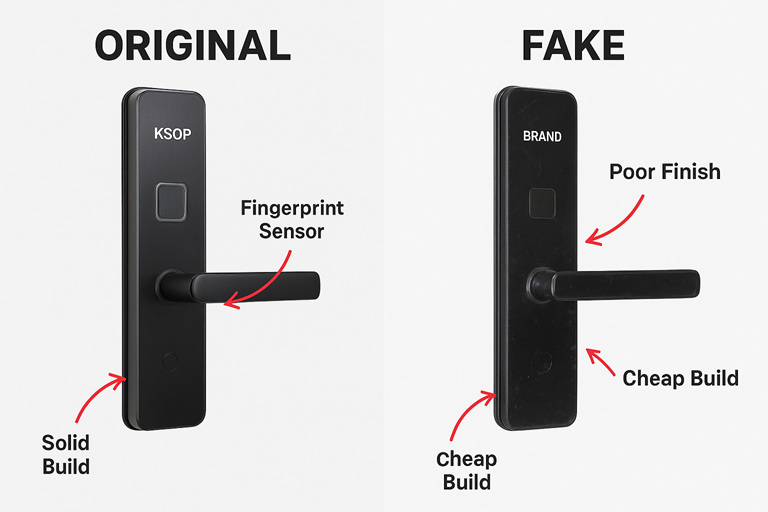
Below are practical, proven checks you can use when purchasing or verifying your smart door lock:
- Check the Packaging Quality
Original smart locks always come in high-quality packaging with standardized printing. Counterfeits typically have:
- Faded or low-quality prints
- Misspellings or grammar errors
- Missing manufacturer contact details
- Unsealed or improperly sealed boxes
- Incorrect logo placement
Tip: Always compare the packaging with images from the manufacturer’s official website.
- Verify the Brand Logo and Model Number
Every genuine smart lock has a correct model name and serial number. Fake ones may copy the logo, but usually:
- The logo is off-center or slightly distorted
- The model number does not exist on the brand’s website
- Serial numbers are missing, duplicated, or randomly printed
You can contact the manufacturer with the serial number to verify authenticity.
- Examine Build Quality and Finishing
High-quality smart locks have:
- Durable metal alloy bodies
- Smooth finishing
- Firm buttons and stable handles
- Strong weight (fake ones tend to be lighter due to cheap materials)
Fake smart locks often show:
- Rough edges
- Cheap plastic components
- Loose fingerprint sensors
- Poor-quality metal plating
When you hold the lock, the weight and build quality alone can reveal authenticity.
- Check the Fingerprint Sensor Quality
Original smart locks use biometric sensors like:
- Semiconductor fingerprint scanners
- 360-degree recognition
- Fast reading (0.3s – 0.5s)
Fake locks usually have:
- Optical sensors
- Slow fingerprint detection
- Low accuracy
- Frequent rejection
If the fingerprint sensor glows too brightly or feels like cheap glass, that’s likely a counterfeit.
- Test the Mobile App Compatibility
Every genuine smart lock brand has an official mobile app available on:
- Apple App Store
- Google Play Store
Fake smart locks may use:
- No app at all
- A cloned or third-party app
- An app not available on official stores
- An app with suspicious permissions
Always scan the QR code and confirm that the app belongs to the verified company.
- Evaluate the Lock’s Smart Features Carefully
Original smart locks come with tested security features, such as:
- Real-time mobile alerts
- Auto-lock
- Virtual password protection
- Bluetooth encryption
- Anti-peep password
- Emergency power supply
- Firmware update support
Fake ones often:
- Advertise many features but most don’t function
- Have slow Bluetooth connection
- Do not support firmware updates
- Provide no cloud backup or logs
Test the features physically before purchase if possible.
- Inspect the Battery Compartment and Power System
A major giveaway of fake smart locks is the battery compartment:
Original smart locks have:
- Neat wiring
- Quality battery connectors
- Proper labeling
- Stable power consumption
Fake smart locks may show:
- Poor soldering
- Weak springs
- No labeling
- Fast battery drain
Also check if the lock has a USB emergency power port – fake versions often skip this feature.
- Look for Certification Labels
Original smart locks include safety certifications such as:
- CE
- FCC
- RoHS
- ISO certifications
Fake locks either:
- Have none
- Use fake, poorly printed stickers
- Use certification logos that mismatch the model
If in doubt, look up the certification number online.
- Buy Only from Authorized Dealers
The easiest way to avoid fake smart locks is to buy from:
- Manufacturer-approved dealers
- Trusted security brands
- Verified online stores
- Official brand outlets
Avoid roadside markets, unknown sellers, and surprisingly cheap deals -especially those without receipts.
- Compare the Price with the Official Store
If a smart lock normally costs ₦80,000–₦150,000 and someone offers it for ₦25,000 or less -it’s definitely fake.
Counterfeiters rely on low prices to attract unsuspecting buyers. Always check price ranges from the brand’s website.
Smart door locks are an investment in safety. While original locks guarantee durability, protection, and long-term performance, fake locks put your home at serious risk. By following the checks above -inspecting build quality, verifying the app, checking serial numbers, and buying from authorized sellers -you can confidently distinguish genuine locks fro -counterfeits. When in doubt, always consult a certified smart lock installer or a trusted security solutions provider.