
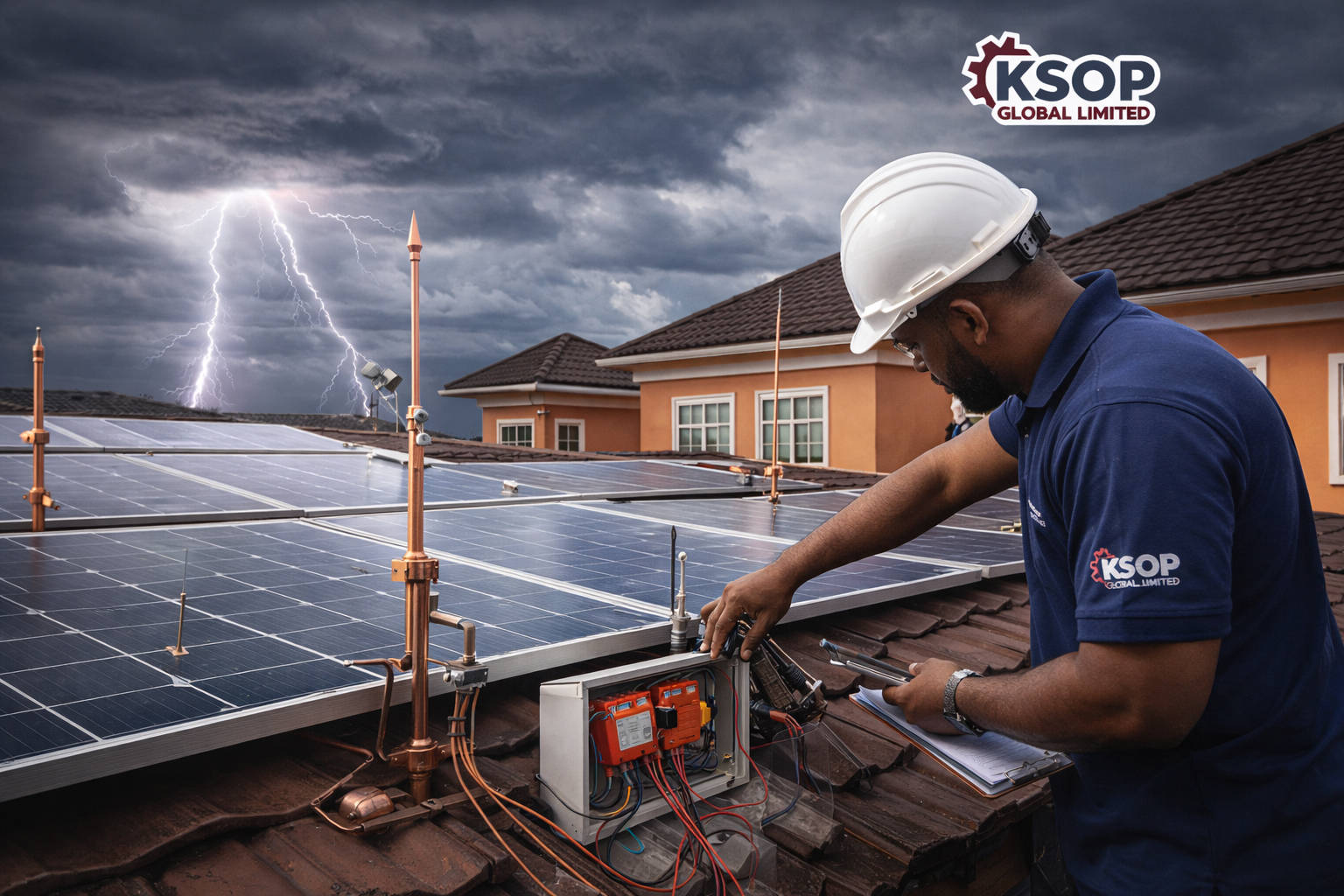
(Complete Guide for Homeowners and Businesses in Nigeria)
Solar power systems have become one of the most reliable energy solutions across Nigeria, providing homes, farms, and businesses with stable electricity despite grid challenges. However, one environmental factor many system owners overlook is lightning. Nigeria’s tropical climate experiences frequent thunderstorms, especially during the rainy season, and lightning strikes can severely damage solar installations if proper protection measures are not in place.
Understanding how lightning interacts with solar systems -and how to safeguard your investment -is essential for maintaining system efficiency, longevity, and safety. This guide explains the risks, protective solutions, and best practices to protect your solar system from lightning damage.
Understanding the Risk of Lightning to Solar Systems
Lightning is a powerful electrical discharge capable of producing millions of volts in a fraction of a second. When it strikes near or directly on a solar installation, it can cause:
- Inverter failure
- Battery damage
- Panel degradation
- Wiring insulation breakdown
- Charge controller malfunction
- Fire hazards or electrical shock risks
Solar systems are particularly vulnerable because rooftop panels and metal mounting structures can act as pathways for electrical surges. Even indirect lightning strikes can induce voltage spikes that travel through cables and damage sensitive electronics.
Protecting your system isn’t optional -it’s a vital part of professional solar design and installation.
Common Lightning Damage Scenarios
Direct Strike
This occurs when lightning hits the panels, mounting frame, or nearby structure. It can instantly destroy components or ignite fires.
Induced Surges
Lightning striking nearby power lines or ground surfaces can send high voltage surges through connected electrical systems.
Ground Potential Rise
Electrical energy enters the earth during a strike and raises ground voltage levels, impacting grounding systems connected to solar installations.
Understanding these scenarios helps in implementing layered protection strategies.
Essential Ways to Protect Your Solar System
1️⃣ Install Proper Grounding (Earthing)
Grounding is the first line of defense. It provides a safe path for excess electrical energy to dissipate into the earth rather than through equipment.
A well-designed grounding system includes:
- Ground rods driven deep into soil
- Bonding of metal structures
- Connection of inverter and panels to earth
- Regular resistance testing
Professional installers ensure compliance with safety standards and optimal grounding resistance.
2️⃣ Use Surge Protection Devices (SPDs)
Surge protectors prevent high voltage spikes from damaging system electronics.
Recommended installations include:
- DC surge protectors on solar panel lines
- AC surge protectors on inverter output
- Main distribution board protection
SPDs detect voltage spikes and divert them safely to ground.
3️⃣ Install Lightning Arrestors
Lightning arrestors are specialized devices placed at strategic points to intercept lightning strikes before they reach critical components.
They are particularly beneficial for:
- Large rooftop installations
- Commercial buildings
- Farms with open exposure
- Industrial solar setups
They redirect strike energy directly to grounding systems.
4️⃣ Ensure Professional Cable Routing
Improper wiring increases lightning vulnerability.
Best practices include:
- Using shielded cables
- Avoiding cable loops
- Running wires through conduits
- Maintaining separation between power and signal lines
Professional routing reduces electromagnetic interference and surge propagation.
5️⃣ Protect Batteries and Inverters
These components are expensive and sensitive.
Protection measures:
- Install indoor housing
- Use ventilation with insulated protection
- Install dedicated surge protection
- Maintain stable grounding connection
Keeping critical components safe extends system lifespan.
6️⃣ Choose Quality Components
High-quality solar equipment includes built-in protections such as:
- Voltage regulation
- Surge tolerance
- Thermal shutdown safeguards
Investing in certified equipment ensures resilience against electrical stress.
7️⃣ Conduct Routine Maintenance Checks
Lightning protection systems must be inspected periodically.
Recommended checks:
- Ground resistance measurement
- Surge protector functionality
- Wiring inspection
- Mounting structure integrity
Preventive maintenance helps detect issues before storms occur.
Additional Safety Tips for Nigerian Conditions
Nigeria’s climate presents unique environmental factors:
- High humidity affecting grounding conductivity
- Seasonal thunderstorms
- Dust accumulation impacting connections
Practical tips:
- Clean panels and connectors
- Inspect after major storms
- Use corrosion-resistant materials
- Ensure professional installation
Localized expertise significantly improves system protection.
The Role of Professional Installation
DIY installation often overlooks critical protection requirements. Professional installers:
- Conduct site risk assessments
- Design layered protection systems
- Ensure regulatory compliance
- Provide ongoing maintenance
Companies experienced in solar deployment understand regional lightning patterns and infrastructure challenges, ensuring reliable protection strategies.
Long-Term Benefits of Lightning Protection
Protecting your solar system yields several advantages:
- Reduced repair costs
- Improved equipment lifespan
- Continuous power reliability
- Enhanced household safety
- Increased investment value
Ultimately, lightning protection is not just about avoiding damage -it ensures uninterrupted energy independence.
Final Thoughts
Solar systems represent a major investment toward sustainable and reliable power in Nigeria. However, exposure to lightning risks means protection must be incorporated from installation through maintenance.
By implementing grounding systems, surge protection devices, lightning arrestors, professional wiring practices, and routine inspections, solar system owners can significantly reduce risk and ensure long-term performance.
Protecting your solar installation today safeguards your energy future tomorrow -ensuring your home or business continues enjoying uninterrupted solar power regardless of weather conditions.