

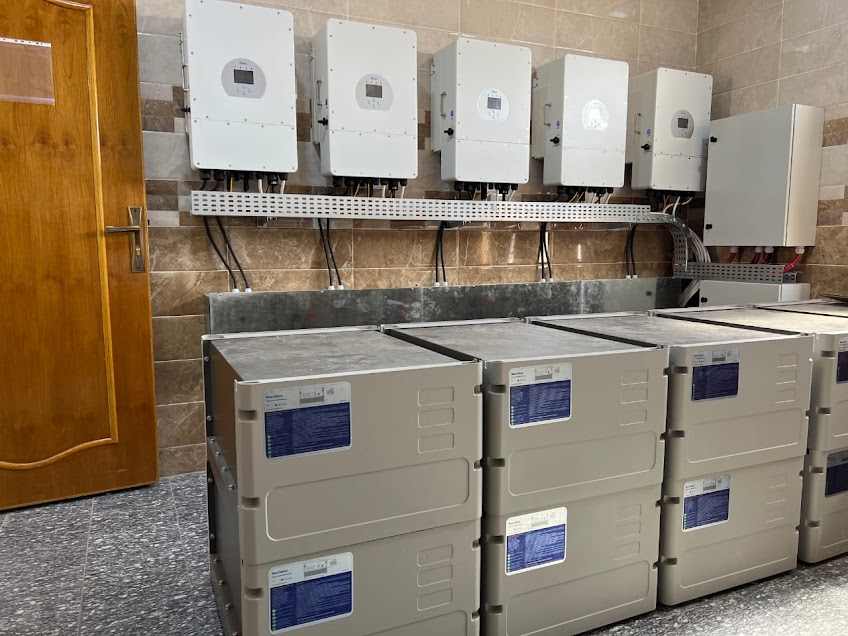
Whether you are using a solar battery, inverter battery, car battery, or generator battery, knowing how to test its health at home is extremely important. In Nigeria-where power supply is unreliable-your battery bank plays a major role in keeping your home or office running. But many Nigerians don’t know how to check their battery health until the system stops working suddenly.
In this guide, KSOP Global Limited breaks down simple, practical, and beginner-friendly steps to check the condition of your battery at home without special tools, as well as advanced testing methods if you have basic equipment like a multimeter.
This article covers:
- How to know if a battery is good or bad
- Simple home testing tricks for any battery
- How to test battery voltage with a multimeter
- How to check battery charging and discharging rate
- Signs your battery needs replacement
- How to extend the lifespan of your battery
- Recommended batteries for Nigerian homes and solar systems
Let’s dive in.
What Determines a Battery’s Health?
Before testing the battery, it is important to understand the three main indicators of battery health:
- Voltage Level
This measures how much electrical energy the battery currently holds. A healthy battery usually stays above its recommended voltage even when under load.
- Capacity (Ah)
This is the battery’s ability to hold energy over time. As batteries age, this capacity reduces.
- Internal Resistance
Healthy batteries have low internal resistance. Higher resistance means the battery is struggling to deliver power, especially under load.
Step-by-Step Guide: How to Test a Battery’s Health at Home
- Visual Inspection (No Tools Needed)
Start with a basic physical check. Look for:
- Swollen or bloated battery case
- Leaking electrolyte
- Rusty or corroded terminals
- Burn marks
- Loose, weak, or melted battery cables
- Strong rotten egg smell (sulfur)
If you notice any of the above, the battery is unhealthy and may be unsafe to use.
- Check the Battery Voltage Using a Multimeter
A digital multimeter is the fastest and most accurate home method.
How to test:
- Set the multimeter to DC Voltage (20V range is fine).
- Connect the red probe to the positive (+) terminal.
- Connect the black probe to the negative (–) terminal.
- Read the voltage on the display.
Healthy battery voltage guide:
For 12V batteries:
- 12.6V -13.0V → Excellent / Fully charged
- 12.2V -12.5V → Good / Partially charged
- 11.8V -12.1V → Fair / Weak battery
- Below 11.8V → Bad battery (losing cells)
For 24V batteries:
- 25.2V -26.0V → Healthy
- 24.4V -25.0V → Weak
- Below 24V → Bad or failing
- Perform a Load Test (Very Important!)
Voltage alone is not enough. A battery may show “12.6V” but still be weak under load.
How to do a simple load test at home:
- Turn on your inverter or connect a known appliance (e.g., fan, bulb).
- Observe how quickly the battery voltage drops.
Interpretation:
- Voltage stays above 12V for long → Healthy battery
- Voltage drops below 11V within minutes → Weak battery
- Voltage drops instantly → Dead or dying battery
This test simulates real-life usage and is the best way to know if your battery still has capacity.
- Check Battery Charging Behaviour
If you have a solar or inverter system, observe how the battery charges.
Signs of good charging behavior:
- Voltage rises gradually and steadily
- Battery warms up slightly (not excessively)
- Charging goes into float mode when full
Signs of poor charging behavior:
- Battery charges too slowly
- Battery overheats
- Battery never reaches full charge
- Charger keeps restarting
These signs mean the battery may have lost capacity or is near its end-of-life.
- Check the Age of the Battery
All batteries have a lifespan. Typical Nigerian battery lifespans:
| Battery Type | Lifespan |
| Lithium (LiFePO4) | 8–15 years |
| Tubular | 3–5 years |
| SMF/VRLA | 1.5–3 years |
| Car Battery | 1–3 years |
If your battery has passed its expected lifespan, reduced performance is normal.
Common Signs Your Battery Is Getting Bad
Watch out for the following:
- System goes off faster than normal
- Battery heats up during charging
- Battery no longer holds charge
- Voltage drops instantly under load
- Charger stays in “charging” mode forever
- Rotten smell or leaking chemicals
- Bulging case
If you see these, the battery has reached the end of its useful life.
How to Extend Your Battery’s Lifespan
✔ Keep batteries in a cool, ventilated space
Heat is the number one enemy of battery lifespan.
✔ Don’t overload your inverter system
Overloading reduces charging efficiency and kills the battery faster.
✔ Charge fully and regularly
Avoid deep discharging below 40%.
✔ Use a high-quality charge controller or inverter
Poor charging damages cells.
✔ Avoid fake chargers, fake inverters, and fake panels
They ruin the battery slowly.
✔ Buy high-quality batteries
KSOP Global Limited recommends:
- Lithium Batteries (LiFePO4 24V/48V)
- Industrial Tubular Batteries
- Original VRLA batteries
Best Batteries for Nigerian Homes and Solar Systems
Based on durability, lifespan, and temperature resistance, here are the best options:
- Lithium Batteries (KSOP Recommended)
- 10+ years lifespan
- Over 6,000 cycles
- Fast charging
- Highly efficient for solar
- Tubular Batteries
- Durable for hot weather
- Good for heavy usage
- SMF/VRLA Batteries
- Good for basic backup
- Affordable
Testing your battery’s health at home doesn’t require an engineer. With just a simple multimeter and load test, you can know whether your battery is still performing well or needs replacement.
Healthy batteries save money, improve efficiency, and protect your inverter or solar system. If you discover your battery is weak or failing, KSOP Global Limited can help you replace it with high-quality, long-lasting lithium or tubular options.
For installations, inspections, or battery upgrades, KSOP is trusted Nationwide for premium solar and backup power solutions.