
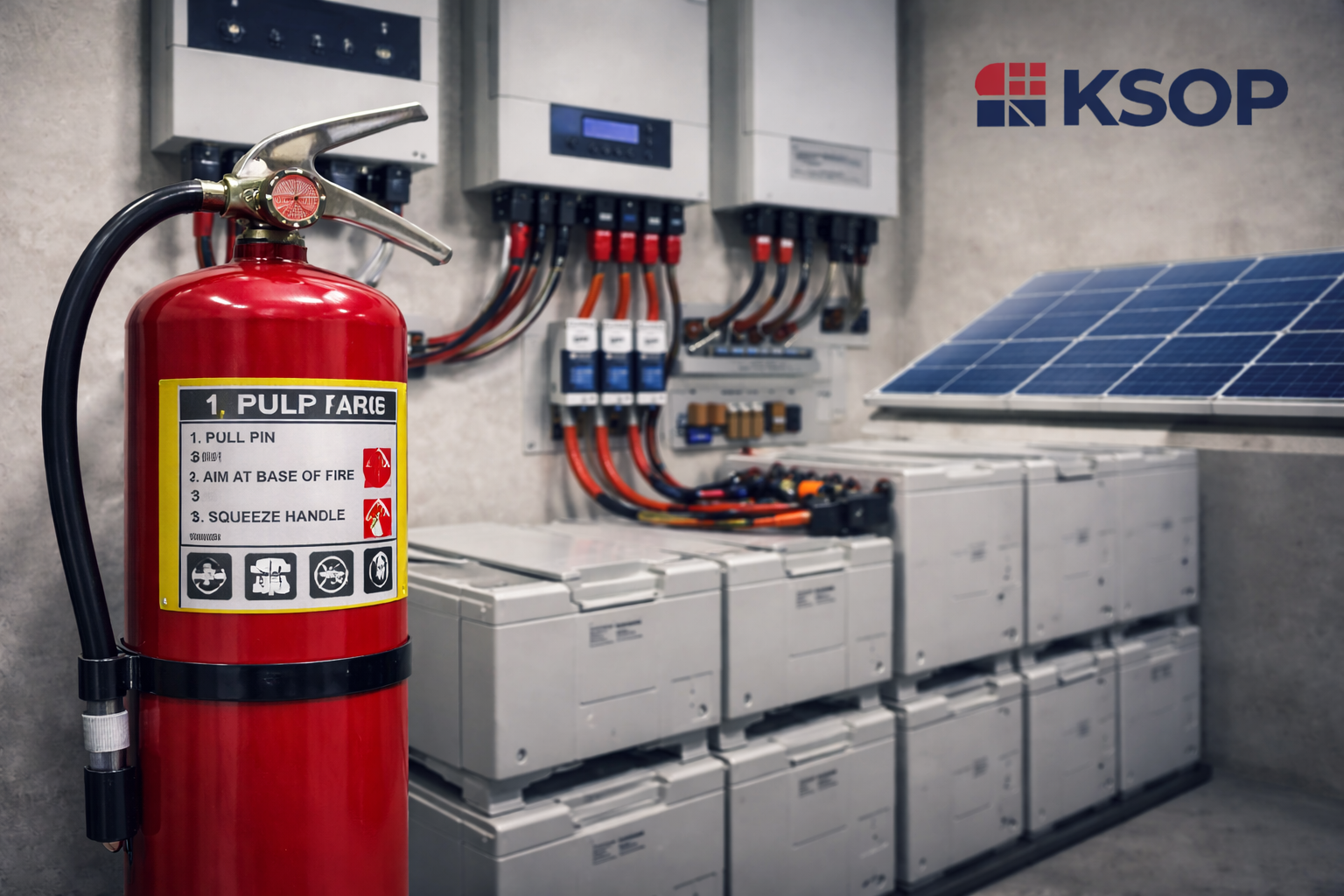
As solar energy adoption continues to grow across homes, businesses, and industrial facilities, safety planning must evolve alongside system deployment. Solar installations provide clean, reliable power -but like any electrical infrastructure, they introduce potential fire risks if not properly managed. One of the most overlooked yet critically important safety measures is placing a fire extinguisher within the solar installation space.
Whether the system is mounted on rooftops, battery rooms, inverter stations, or solar farms, having accessible fire suppression equipment can prevent minor incidents from escalating into devastating losses.
In this article, we explore why fire extinguishers are essential in solar environments, what risks exist, how they protect investments and lives, and how to implement best practices for fire safety compliance.
Understanding Fire Risks in Solar Installations
Solar systems are generally safe when professionally designed and maintained. However, the combination of electrical current, energy storage, and environmental exposure creates conditions where fires can occur.
Electrical Faults
Loose wiring, damaged insulation, or improper installation may lead to short circuits or overheating. High-voltage DC systems carry continuous current, increasing arc-fault risks that can ignite nearby materials.
Battery Storage Hazards
Lithium-ion batteries and other storage technologies store large amounts of energy. Thermal runaway, physical damage, or improper ventilation can result in overheating and combustion.
Inverter Malfunction
Inverters convert DC to AC power. Component failure, dust buildup, or cooling issues may cause sparks or overheating.
Environmental Factors
Dust accumulation, rodent damage, lightning strikes, and extreme heat can increase the probability of fire incidents.
Human Error
Improper maintenance, unauthorized modifications, or poor equipment handling can create ignition points.
While modern systems incorporate protection mechanisms, no installation is completely risk-free -making fire preparedness essential.
Why Fire Extinguishers Are Essential in Solar Spaces
- Immediate Response Capability
A fire extinguisher provides instant suppression capability before emergency services arrive. Early intervention often determines whether damage remains minimal or becomes catastrophic.
- Protection of Expensive Assets
Solar systems represent significant financial investments. Fire damage can destroy panels, batteries, inverters, wiring, and structural infrastructure. A simple extinguisher can safeguard equipment worth millions.
- Life Safety Assurance
Installers, maintenance personnel, and occupants depend on safe environments. Quick response tools reduce injury risk and protect lives.
- Business Continuity
Commercial facilities relying on solar power risk operational downtime after fire damage. Fire suppression readiness helps maintain uptime and revenue stability.
- Insurance and Compliance Requirements
Many safety codes and insurance policies require proper fire protection measures in electrical installations. Compliance avoids penalties and claims rejection.
- Environmental Responsibility
Fires release toxic smoke and pollutants. Preventing escalation aligns with the sustainability goals of renewable energy systems.
Choosing the Right Fire Extinguisher for Solar Installations
Not all extinguishers are suitable for electrical environments. Selecting the proper type is critical.
Class C Extinguishers
Designed specifically for energized electrical equipment fires. Ideal for inverter rooms and electrical panels.
CO₂ Extinguishers
Leave no residue and are effective on electrical fires. Commonly used in battery storage and control rooms.
Dry Chemical Extinguishers
Multipurpose and widely available. Effective for electrical and combustible material fires.
Clean Agent Extinguishers
Use non-conductive gases to suppress fires without damaging sensitive electronics.
Important Note
Water-based extinguishers should never be used on energized electrical systems due to shock risk.
Optimal Placement Within Solar Installations
Strategic positioning ensures accessibility and effectiveness.
- Near inverter units
- Inside battery storage rooms
- At system control panels
- Entry points of solar equipment rooms
- Maintenance access areas
- Rooftop access points (if feasible)
Extinguishers must remain visible, unobstructed, and mounted at accessible heights.
Maintenance and Inspection Best Practices
Owning extinguishers is not enough – they must remain operational.
- Conduct monthly visual inspections
- Check pressure gauges
- Verify seals and pins
- Replace expired units
- Perform annual professional service
- Train staff on proper use
Neglecting maintenance renders extinguishers ineffective during emergencies.
Staff Training and Preparedness
Prepared personnel maximize fire response efficiency.
Training Should Include
- Identifying fire classes
- Safe extinguisher operation (PASS method -Pull, Aim, Squeeze, Sweep)
- Evacuation protocols
- Emergency contact procedures
Knowledge transforms equipment into effective protection.
Integration with Broader Fire Safety Measures
Fire extinguishers should implement a complete safety strategy:
- Smoke detection systems
- Proper cable management
- Grounding and surge protection
- Thermal monitoring
- Routine system audits
- Fire-resistant installation materials
Layered safety ensures comprehensive risk mitigation.
The Cost of Neglecting Fire Safety
Ignoring fire preparedness can result in:
- Total system destruction
- Legal liabilities
- Insurance claim rejection
- Operational shutdown
- Brand reputation damage
- Personal injury or fatalities
Compared to these consequences, the cost of proper extinguishers is minimal.
Supporting Sustainable Energy Responsibility
Solar energy represents a commitment to environmental progress and technological advancement. Integrating fire safety reinforces responsible adoption. A protected installation reflects professionalism, reliability, and long-term vision.
Organizations that prioritize safety demonstrate industry leadership and earn greater client trust.
Conclusion
Solar installations are powerful assets delivering energy independence, cost savings, and environmental benefits. However, the presence of electrical systems and energy storage introduces fire risks that must be responsibly managed.
Installing appropriate fire extinguishers within solar installation spaces is not merely precautionary -it is essential. They protect lives, preserve investments, ensure compliance, and maintain operational continuity.
Safety readiness reflects professional integrity and forward-thinking system management. As solar infrastructure expands globally, integrating fire preparedness measures ensures that sustainability and safety grow together.