
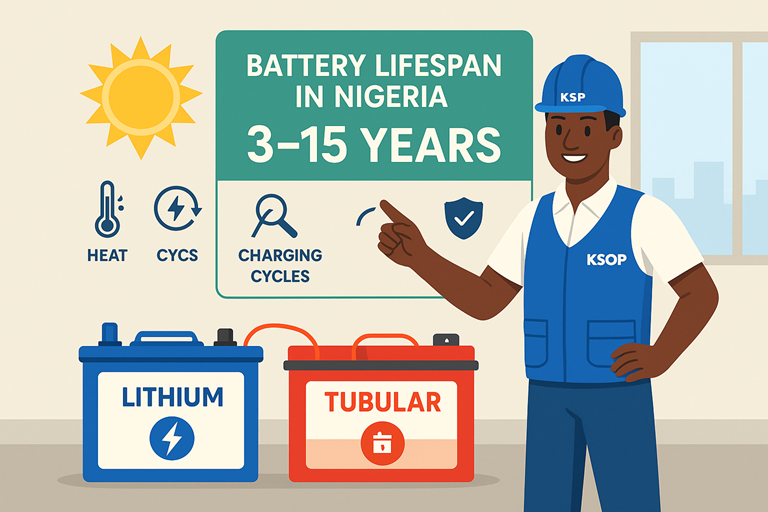
As Nigeria continues to face challenges with grid instability, rising fuel prices, and an increasing demand for reliable electricity, solar energy has quickly become one of the most trusted alternatives. But while solar panels often get the spotlight, solar batteries-the powerhouse of every solar system-play an even bigger role in ensuring round-the-clock energy supply.
One of the most common questions Nigerians ask before investing in solar is:
“How long do solar batteries last in Nigeria?”
In this detailed guide, we will break down everything you need to know about battery lifespan, factors that affect their durability, how to extend their life, and which battery types perform best under Nigeria’s hot climate.
Understanding Solar Battery Lifespan
The lifespan of solar batteries is measured in two major ways:
- Calendar lifespan (years)
This refers to how many years the battery can last before its ability to hold charge drops significantly.
- Cycle life (charge and discharge cycles)
A cycle refers to one full discharge and recharge. The more cycles a battery can handle, the longer it will last.
Most solar batteries are rated between 1,000 – 10,000 cycles, depending on the technology and brand.
Average Lifespan of Solar Batteries in Nigeria
Here is a breakdown of how long different battery types last under typical Nigerian usage:
🔋 1. Lithium-ion Batteries (LFP)
- Lifespan: 8-15 years
- Cycle life: 3,000-10,000 cycles
- Best for: Homes, businesses, and systems that require long-term reliability
- Popularity: Increasing rapidly in Nigeria
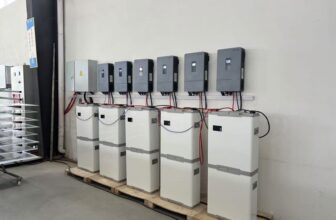
Lithium batteries are currently the best performers in Nigerian conditions. They handle deep discharges well, operate efficiently in heat, and recharge fast. Their long lifespan and high durability make them a favorite for solar installers and homeowners.
🔋 2. Tubular Lead-Acid Batteries (Tall Tubular / Inverter Batteries)
- Lifespan: 3-5 years
- Cycle life: 600-1,200 cycles
- Best for: Small to medium homes, basic backup systems
- Popularity: Very high due to affordability
While more affordable, tubular batteries require maintenance and are sensitive to heat and over-discharge. If well maintained, many users in Nigeria get up to 4-5 years of good performance.
🔋 3. AGM (Absorbent Glass Mat) Sealed Batteries
- Lifespan: 2-4 years
- Cycle life: 300-800 cycles
- Best for: Light backup systems
- Popularity: Medium
AGM batteries are maintenance-free but typically have a shorter lifespan in Nigeria due to the heat and deep discharge demands of solar systems.
🔋 4. Gel Batteries
- Lifespan: 3-5 years
- Cycle life: 500-1,000 cycles
- Best for: Environments requiring low maintenance
- Popularity: Medium
Gel batteries are more durable than AGM, but still not comparable to lithium-ion batteries.
Factors That Affect Solar Battery Lifespan in Nigeria
Nigeria’s climate and usage patterns significantly influence how long solar batteries last. Key factors include:
🔥 1. Temperature (Heat Exposure)
Heat is the number one enemy of battery lifespan.
Nigeria’s temperature often ranges from 30°C – 40°C, and this can reduce battery capacity over time.
Lithium batteries tolerate heat better, but even they perform best when placed in cool, ventilated spaces.
🔋 2. Depth of Discharge (DoD)
This refers to how much battery power is used before recharging.
- Lithium batteries allow deeper discharge (up to 80-90%)
- Lead-acid batteries prefer shallow discharge (30-50%)
Over-discharging lead-acid batteries significantly shortens their life.
⚡ 3. Charging Method & Charge Controller Quality
Using a poor-quality charge controller or inverter can cause:
- Overcharging
- Undercharging
- Fast battery degradation
High-quality MPPT charge controllers extend battery lifespan.
🏡 4. Load Size and Usage Behavior
Oversizing the load (using more appliances than the system was designed for) forces the battery to work too hard.
Typical heavy-load appliances that reduce battery lifespan include:
- Air conditioners
- Freezers
- Electric irons
- Water pumps
🛠️ 5. Maintenance Practices
For lead-acid batteries, regular maintenance is mandatory:
- Checking water levels
- Cleaning terminals
- Avoiding deep discharges
Poor maintenance can reduce lifespan by 40-60%.
Lithium batteries, however, require zero maintenance.
How to Make Solar Batteries Last Longer in Nigeria
Whether you are using lithium or lead-acid batteries, here are proven ways to extend battery lifespan:
- Keep batteries in a cool, shaded, ventilated area
Avoid enclosed spaces like:
- hot generator houses
- airtight wooden battery boxes
- poorly ventilated rooms
- Avoid overloading your inverter
Always size your solar system properly.
If unsure, work with a professional installer (e.g., KSOP Global Limited) to determine your correct load.
- Avoid deep discharges, especially for lead-acid
Do not allow your battery percentage to fall below:
- 30-40% for lead-acid
- 10-20% for lithium
- Use MPPT charge controllers
These offer smarter and safer charging, especially in hot climates.
- Choose high-quality batteries with a proven warranty
Good brands typically offer:
- Lithium: 5-10 years warranty
- Tubular: 1-2 years warranty
Always buy from reputable suppliers.
Which Solar Battery Lasts Longest in Nigeria?
If lifespan, performance, and low maintenance are your priorities, Lithium (LiFePO4) batteries are the best option.
They offer:
- Long lifespan (8-15 years)
- Higher energy efficiency
- Deeper discharge capability
- Fast charging
- Better heat resistance
While they cost more upfront, they are cheaper in the long run.
How to Know When Your Solar Battery Is Dying
Watch out for these signs:
- Battery drains faster than normal
- Inverter beeps frequently
- Low voltage warnings
- Battery not reaching full charge
- Lights dimming under load
If you notice these symptoms, it may be time to replace the battery.
Solar batteries are the heart of any solar power system, and understanding their lifespan helps you make the right investment. In Nigeria, where heat and inconsistent electricity place high demand on batteries, choosing durable, efficient batteries is essential.
Lithium-ion batteries last the longest-8 to 15 years-and deliver the best performance for both homes and businesses. Meanwhile, tubular, AGM, and gel batteries serve as cost-effective alternatives but usually need replacement more frequently.
For maximum durability, ensure proper installation, correct sizing, good ventilation, and purchase from reputable solar professionals like KSOP Global Limited, known for quality components and expert installation.