
Power fluctuations are one of the biggest causes of inverter failure in Nigeria. From sudden voltage spikes to unstable grid supply and generator changeovers, many homes and businesses unknowingly damage their inverters due to poor protection and wrong usage practices. Unfortunately, inverter repairs or replacements can be expensive-especially hybrid and high-capacity systems.
In this guide, KSOP Global Limited explains how to prevent inverter damage during power fluctuations, why these issues occur, and the best protective meaures every Nigerian solar user should implement to keep their inverter running efficiently for years.
Why Power Fluctuations Are Common in Nigeria
Nigeria’s electricity environment is unique and challenging. Inverters are exposed to unstable conditions such as:
- Unstable Grid Voltage
Public electricity often fluctuates between low voltage, overvoltage, and sudden outages. These variations can:
- Burn inverter input circuits
- Damage charging boards
- Trigger internal system errors
- Generator Switching Surges
When users switch between generator and inverter improperly, sudden voltage surges can:
- Destroy inverter MOSFETs
- Blow fuses and internal relays
- Reduce inverter lifespan
- Poor Earthing and Wiring
Many Nigerian buildings lack proper earthing systems. This increases the risk of:
- Lightning-induced surges
- Static discharge damage
- Inverter motherboard failure
- Inferior Power Protection Devices
Using low-quality stabilizers, fake surge protectors, or no protection at all leaves inverters vulnerable.
How Power Fluctuations Damage Inverters
Understanding how damage occurs helps you prevent it effectively.
- Overvoltage Damage
Excess voltage entering the inverter can:
- Burn internal components
- Cause system shutdowns
- Lead to permanent failure
- Undervoltage Stress
Low voltage forces the inverter to work harder, causing:
- Overheating
- Battery strain
- Reduced efficiency
- Sudden Power Surges
Surges from lightning, generator startup, or grid restoration can:
- Instantly damage inverter boards
- Corrupt firmware
- Cause unpredictable faults
Proven Ways to Prevent Inverter Damage
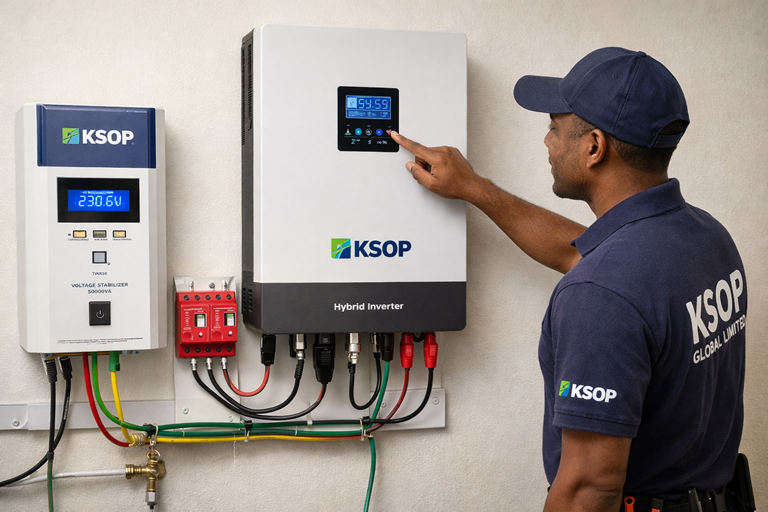
- Install a High-Quality Automatic Voltage Regulator (AVR)
A reliable AVR or voltage stabilizer protects your inverter by:
- Regulating incoming voltage
- Preventing overvoltage and undervoltage
- Stabilizing grid power before it reaches the inverter
⚠️ Important:
Do not use cheap or underrated stabilizers. KSOP Global Limited recommends industrial-grade AVRs matched to inverter capacity.
- Use Proper Surge Protection Devices (SPD)
Surge protectors are essential, especially in Nigeria.
Best practices:
- Install AC surge protectors on grid input
- Install DC surge protectors on solar panel lines
- Use lightning arresters in high-risk areas
These devices absorb sudden voltage spikes before they reach sensitive inverter components.
- Ensure Proper Earthing and Grounding
A solid earthing system is non-negotiable for inverter safety.
Proper grounding:
- Redirects excess voltage safely into the ground
- Protects inverter electronics
- Reduces lightning and static damage
KSOP Global Limited ensures:
- Copper earth rods
- Correct earth resistance values
- Separate grounding for inverter and solar array
- Avoid Manual Power Switching Errors
Improper switching between:
- Grid and inverter
- Generator and inverter
can cause severe surges.
✅ Use automatic transfer switches (ATS)
❌ Avoid manual plug-in or switch-over methods
Automatic switches ensure smooth, surge-free transitions.
- Set Correct Inverter Charging and Voltage Parameters
Wrong inverter settings can silently destroy your system.
Ensure:
- Correct battery type selection (Lithium, AGM, Tubular)
- Proper charging voltage limits
- Safe grid input voltage range
KSOP technicians professionally configure:
- Charging profiles
- Cut-off voltages
- Battery protection settings
- Use Original, High-Quality Inverters
Fake or low-quality inverters:
- Lack proper protection circuits
- Fail quickly under Nigerian power conditions
- Offer little to no warranty support
KSOP Global Limited installs only:
- Certified hybrid inverters
- Inverters tested for high temperature and unstable grids
- Models with built-in surge and overload protection
- Protect the Inverter from Heat and Poor Ventilation
Overheating worsens damage from voltage fluctuations.
Best practices:
- Install inverter in a cool, ventilated area
- Avoid direct sunlight
- Maintain recommended clearance around inverter
Heat combined with unstable power drastically reduces inverter lifespan.
- Avoid Overloading the Inverter
Overloading causes:
- Sudden shutdowns
- Internal overheating
- Damage to inverter power boards
Always:
- Match inverter size to load demand
- Avoid connecting heavy appliances beyond capacity
- Use load management strategies
KSOP conducts professional load assessments before installation.
- Regular Maintenance and Inspection
Routine checks help identify early warning signs:
- Error codes
- Fan failure
- Unusual noise
- Heating issues
KSOP Global Limited offers:
- Preventive maintenance services
- System health checks
- Firmware updates
Signs Your Inverter Is at Risk
Watch out for:
- Frequent shutdowns
- Burning smell
- Error messages during grid return
- Battery charging inconsistencies
Early action can prevent total failure.
Why KSOP Global Limited Is Trusted for Inverter Protection
Homeowners and businesses across Nigeria trust KSOP Global Limited because we offer:
✔ Professional inverter sizing
✔ Certified surge protection systems
✔ Proper earthing and wiring
✔ Original inverters with warranty
✔ Expert installation and after-sales support
We don’t just install solar systems-we protect your investment.
Power fluctuations are unavoidable in Nigeria, but inverter damage is not. With the right protection systems, correct installation practices, and professional support, your inverter can last many years without failure.
If you want a solar or inverter system built to withstand Nigerian power conditions, KSOP Global Limited is your trusted partner.
📞 Contact KSOP today for a professional inverter protection assessment.